| 
 Although
today much of that has changed, any history of air cargo should include
the simple fact that even now the glam of this business is somehow still
reserved (at least in the imagination if not in the reality) for the
airline passenger business. Although
today much of that has changed, any history of air cargo should include
the simple fact that even now the glam of this business is somehow still
reserved (at least in the imagination if not in the reality) for the
airline passenger business.
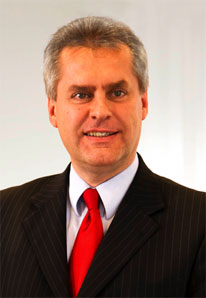
Ulrich Ogiermann, who been CEO at Cargolux
for the past seven years and now, is also giving something back serving
as Chairman of The International Air Cargo Association (TIACA), came
out of the passenger business.
But unlike some others, Mr. Ogiermann
switched over to air cargo first at Lufthansa where he found an industry
fairly well populated with smart, well educated people, so Uli has been
moving up the industry corporate ladder ever since.
Blackberry in hand, this executive seems at this point a freight man
for life.
How the hard driving Ogiermann got involved
and in this tough climate decided to throw himself into lifting TIACA
with all that entails, is another story.
Safe to say what goes around comes around,
as Cargolux during another era, was the carrier in air cargo under Robert
Arendal that got behind a fledgling TIACA, and the organization headed
to Luxembourg for the first Air Cargo Forum of the modern era in 1994.
After Luxembourg, TIACA would go to Dubai
and fill its coffers becoming a rich powerful organization and the rest
as they say is history.
But at inception it was Luxembourg that
made the difference between life or else at TIACA.
So now as the air cargo universe in 2009
teeters and gasps in this tough unrelenting business morass, up pops
Ulrich Ogiermann and Lux-Deluxe once again just when TIACA and all of
us can use a boost.
TIACA, we think has doubled down its luck.
Here Uli outlines what lies ahead.
FT: Can
you tell me what is top priority at TIACA right now?
UO:
Our prime focus is in the area of Industry
Affairs because we want to become a stronger voice for the industry.
I also want to see TIACA working more closely with other trade associations
and developing closer dialogue with shippers and forwarders about their
future air cargo transportation needs.
We also want to ensure our Air Cargo
Forum in Amsterdam next year is one of the best ever and we have decided
to make several changes to the format based on feedback from previous
events.
Finally, I want to extend our reach
and membership in more geographic markets.
FT: What
change has occurred at TIACA?
UO: Since
taking over as Chairman in April 2009, my focus has been to work with
the TIACA team and the Board to implement a series of organization and
structural changes designed to increase our focus in key areas where
we can most benefit our members. We have elected a new Board that includes
senior executives from across the industry and we have refreshed our
committees.
Notably, we have created three
new committees to strengthen TIACA’s corporate governance and
the Board’s financial expertise to effectively oversee TIACA’s
financial affairs and investments, to attract Board members that are
decision-makers, shippers, forwarders and a representative from the
financial industry and, finally, to oversee staff compensation.
Three committees have also been
created to address TIACA’s core areas of value to members –
Industry Affairs, Education and Training and the Air Cargo Forum &
Exposition.
We have also reviewed our Industry
Affairs policies and have agreed to focus on driving awareness and improvement
in a number of important areas such as Customs and Performance Standards,
Environment and Security. TIACA will continue its long-standing advocacy
for the liberalization of traffic rights as opportunity allows, but
we will devote most of our resources to the three core areas I’ve
mentioned.
The new committee structure
and clearly defined goals will make for a more dynamic organization
focused on deliverables. Our new results-oriented mandate gives us a
good compass to gauge what we do and why, especially in these challenging.
FT: What
contribution has TIACA made to air cargo that it is most proud of and
you consider to be longest lasting?
UO: The
challenge for just about every association in every industry is to ‘ring
fence’ their contribution. In my opinion, TIACA has a unique position
in representing all parts of the air cargo supply chain and we have
to continually be looking to use that knowledge and expertise at a government
and regulatory level to ensure new legislation does not negatively impact
the air cargo industry.
I can see plenty of evidence
of TIACA doing that behind the scenes. In recent years, we have established
much stronger and more regular dialogue with bodies such as the World
Customs Organization, the European Parliament, the US DoT, the International
Civil Aviation Organization (ICAO), the United Nations Conference on
Trade & Development (UNCTAD) and the World Bank.
Our Board and Members are all
strong, experienced air cargo professionals. I think we know what is
best for our industry but we are also wise enough to know that change
takes time, especially through the regulatory consultation process.
But we are increasingly ‘at the table’ and making our point
of view heard.
In March, my predecessor Jack
Boisen testified before the House of Representatives’ Homeland
Security Committee to provide TIACA’s perspective in air cargo
security issues. Another good example is the close working relationship
TIACA has established with the Transportation Security Administration
(TSA) over its ultimate program for 100% piece level screening of cargo
carried on passenger aircraft. The TSA has consulted with TIACA, its
most senior representatives have spoken at our events and it has produced
papers and guidance for our members.
FT:
Where will the next TIACA industry trade show be held AND why should
the industry attend?
UO: Our
next Air Cargo Forum and Exposition is in Amsterdam from November 2-4th
2010. There are plenty of great reasons to attend:
•
Amsterdam is one of the world’s major cargo gateways
so delegates can combine local business meetings with the exhibition
and conference
•
We expect the global economy to be showing clearer
signs of recovery come the second half of 2010 and that means companies
will be more confident and looking for new business opportunities.
ACF is a great place to meet old, current and prospective customers
• ACF remains
one of the most cost efficient exhibitions in terms of exhibitor
space
•
In the course of three days, delegates will have the opportunity
to meet top industry people that might otherwise take months and
months to see, saving the significant time and cost associated with
travelling to multiple locations worldwide
•
We are introducing a new format with extended exhibition
opening times and a far more flexible conference based on a series
of one-hour breakout sessions
•
We have reduced the number of Gala Dinners from two
to one to allow delegates greater freedom to organize their own
events with customers and prospects and we are increasing the number
of complimentary conference passes for exhibitors |
I am delighted to say we already have
a significant commitment for exhibition space from former and new exhibitors
that recognize ACF and Amsterdam as a great time and place to do business.
FT:
What about TIACA is misunderstood AND what are you doing about it?
UO: We
recognize that some people associate TIACA mainly with our Air Cargo
Forum & Exposition, which has been one of the biggest and most successful
events in the air cargo industry for many decades now in terms of bringing
companies together from across the globe to talk business and to learn
more about issues affecting the industry.
We are proud of the ACF but it is only
one element of what the Association does. As I have already stated,
we are placing more emphasis than ever on Industry Affairs and Education
& Training. Our prime goal is to add value for our members but we
believe our actions ultimately can help the wider industry, particularly
when we can play a part in influencing regulators to take our views
on board.
Today, we have a new Industry Affairs
Committee made up of senior executives that want to influence positive
change. These are people with far better things to do in life than to
sit on a committee just for the sake of it. They want to have an impact
and I am confident you will see TIACA becoming far more proactive in
this area. To me, Industry Affairs must be at the forefront of the Association’s
work.
FT:
Given the current industry climate what can TIACA do to enable its members
to better cope with challenges ahead?
UO: The
big area, I believe, is regulatory change. Businesses across our industry
are struggling to cope with the financial pressures of the economic
downturn but in addition to this, politicians continue to contemplate
a raft of legislation that could be just as significant.
We have to take the longer-term view and
be active behind the scenes to ensure new regulations are practical
and workable for the industry, do not add unnecessary costs and do not
impair the speed of air cargo.
For many years, TIACA has been fortunate
to enjoy the services of John Raven in Brussels. John has been extremely
proactive in monitoring output from the EU, communicating our views
to politicians and regulatory bodies and informing our members. More
recently, we have secured the services of Sue Presti to do the same
job for TIACA in Washington.
Through the work of John Raven and Sue
Presti, TIACA has developed excellent contacts within the World Bank,
which has asked for TIACA’s input into a new study on air cargo
and customs facilitation issues. We are also working closely with the
Washington-based staff of other associations, such as the Cargo Airline
Association, Air Transport Association and IATA to further our mutual
objectives.
As a result of our policy work, TIACA
is now a recognized player in Washington, with significant contacts
in key U.S. government agencies such as TSA, Customs and Border Protection,
the departments of Treasury, State, Transportation and Commerce, the
U.S. Trade Representative’s Office, and the Federal Aviation Administration
and we now serve on several advisory committees to the U.S. government.
FT:
What would you like to see changed in air cargo as top priority and
can TIACA help accelerate?
UO: Well,
I would love to change the cyclical nature of world trade and get us
off the rollercoaster ride we seem to have to negotiate every few years!
More feasibly, I think it is about ensuring that when we face change
imposed on us by regulatory forces, that any new legislation has already
taken into account the needs of our industry and does not just leave
us to pick up the pieces, incurring more cost and delays along the way.
FT: Why
did you accept the TIACA post and once onboard what surprised you?
UO: TIACA
has great potential and I want to see it realized. I believe the importance
of the air cargo industry to world trade and economic development is
often understated and I want that to be part of changing that. We need
to ensure that politicians understand the important role our industry
plays and that they take this onboard before they support changes that
may harm our ability to perform services that help to generate employment,
promote economic wellbeing and attract inward investment.
I think my biggest surprise as I have
become more involved with the Association is the volume of activity
it carries out to inform and influence policymakers. It is easy to be
on the outside and to criticize an apparent lack of progress but I see
a lot of highly committed people trying to move the Association forward
for the benefit of its members.
In the past two years, these activities
have included:
•
As a result of our efforts in the area of security
policymaking, we now have input and an elevated profile before key
policymakers, as the Obama Administration and the new Congress begin
to grapple with air cargo security issues
• As I
said, my predecessor was invited to address the U.S. Congress to
give the air cargo industry view on aviation security
• For the
first time, TIACA provided comments to TSA as it revised its various
security programs for airlines and other regulated parties
• We brought
to the attention of the aviation community the fact that U.S. Customs
plans to install Radiation Portal Monitors (RPMs) at all U.S. airports
over the next several years. We’ll continue following up to
try to ensure that this initiative does not impede air cargo flows
as Customs rolls this out to new airports
• TIACA
has supported efforts to conclude a trade facilitation agreement
through the World Trade Organization. Although the rest of the Doha
Round agenda is stalled, the trade facilitation negotiations have
progressed fairly smoothly and may be nearing final agreement
• Support
for WCO Data Model: John Raven, our representative in Brussels,
has worked extensively at the WCO to encourage the use of common
data elements, and to limit the number of data elements to only
those that are truly necessary. Sue Presti has been working with
U.S. officials to support the same goal
• Development
of U.S. Customs automation systems: We have worked with many other
industry partners on development of U.S. Customs’ next generation
automation system and its single window International Trade Data
System, to try to ensure that the air components are manageable
and timely
• TIACA
has supported modernization of customs practices in many key foreign
markets. As part of this effort, we are working with the World Bank,
which asked for TIACA’s input into a new study on air cargo
and customs facilitation
• TIACA
has continued to be the leading voice for liberalizing air traffic
rights for cargo. We have met with key policymakers at the departments
of Transportation, State and Commerce to advise them of TIACA’s
position and provide background information for aviation negotiations.
As a result, we are now engaged in an ongoing dialogue with these
policymakers
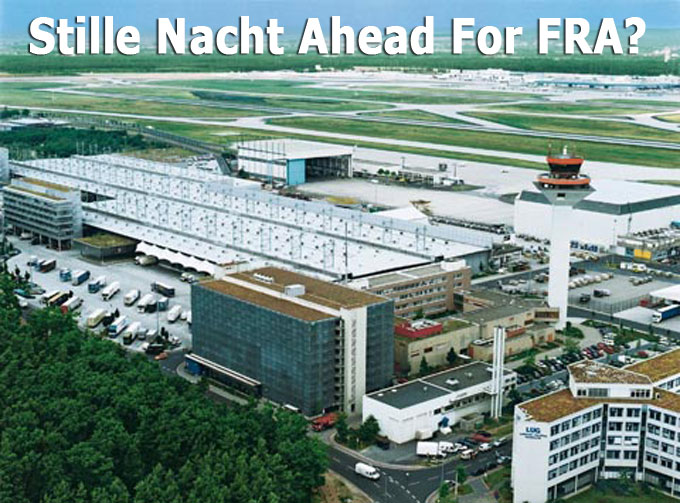
• We narrowed
the scope of our environmental work to focus on the two issues we
determined were most critical to air cargo, which were not being,
addressed as high priorities by other groups: food miles and restrictions
on night operations (noise initiatives). We are seeking to correct
widespread misconceptions on both issues by educating policymakers
and negotiators, and have met with officials from key U.S. agencies
including the departments of Transportation, State and Commerce
– all of which participate in negotiations on these issues
– to advise them of TIACA’s position. We now serve on
two key advisory groups to the U.S. government on environmental
issues. |
These are just some of the tangible examples
of TIACA’s work but we are determined to do more.
Geoffrey Arend
|









 Air
Cargo News FlyingTypers leads the way again as the world’s first
air cargo publication to connect the industry to the broadly expanding
and interactive base for social commentary—Twitter.
Air
Cargo News FlyingTypers leads the way again as the world’s first
air cargo publication to connect the industry to the broadly expanding
and interactive base for social commentary—Twitter. August
21: DXB landed double-digit growth
in passenger traffic during July. Pax traffic rose 12.6 percent, biggest
spike since May 2008.
August
21: DXB landed double-digit growth
in passenger traffic during July. Pax traffic rose 12.6 percent, biggest
spike since May 2008. August
21: China Airlines operates 22 weeklies
Taiwan/China but goes to 55 August 31 for 10% of total business that
may push carrier into profit in 2009.
August
21: China Airlines operates 22 weeklies
Taiwan/China but goes to 55 August 31 for 10% of total business that
may push carrier into profit in 2009.  August
20: Maggie Martinez is new V P-Backstage
Cargo. The Consolidators Int'l sub serves show biz." A film set
to a script anywhere," she said.
August
20: Maggie Martinez is new V P-Backstage
Cargo. The Consolidators Int'l sub serves show biz." A film set
to a script anywhere," she said. 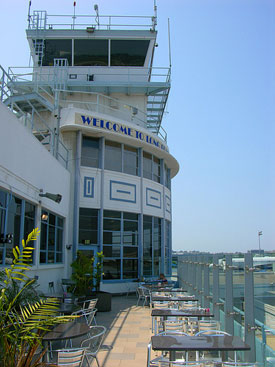 August
20: Airport observation decks disappeared.
USA Today says Long Beach Calif., may be the best of what’s left.
http://www.longbeach.gov/ai
August
20: Airport observation decks disappeared.
USA Today says Long Beach Calif., may be the best of what’s left.
http://www.longbeach.gov/ai