 |
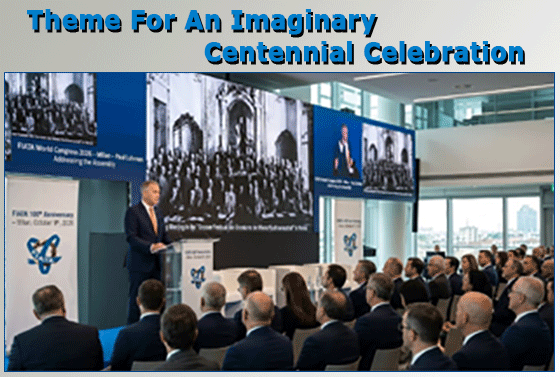
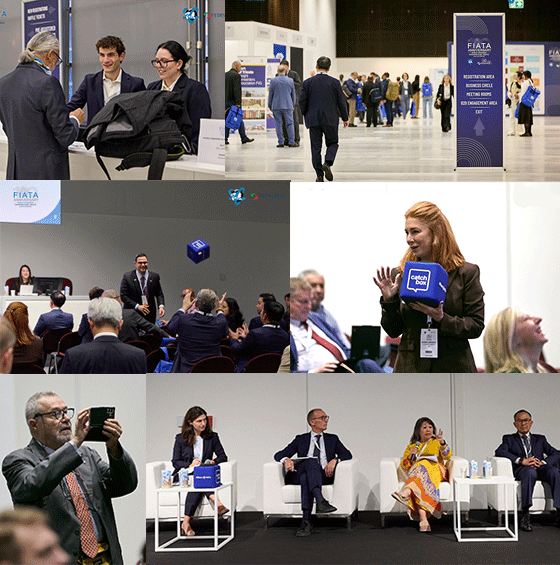
Last week in Milan FIATA celebrated its first centenary. I was wondering what could be a decent way to celebrate the anniversary in these pages and I thought I should go one step further than merely giving account of the rich debate on today’s role of forwarders in trade logistics that took place at MICO. A song came to my mind, emerging from the past. It was probably meant for the CREAM when it was written, and was perhaps side-lined because the band split. I personally consider “Theme for an imaginary western” by Jack Bruce and Pete Brown a true masterpiece, one of the songs that marked my youth, as it was published precisely one day after my 17th birthday on Aug 29th 1969. Since then, it stably put the concept of imagination in my vocabulary. At Woodstock, the Mountain gave a celebrated live version, but this neat, simple one remains the best for me; with its cuddling rhythm it makes you dream.
There are times when imagination is the only help remaining, when life seems to split in all directions and the world runs against convenience and common sense. Even during more active and lively circumstances, even if you are there, alive and kicking . . . imagination is a source of improvement. So I tried to use my imagination to celebrate 100 years of FIATA in my own way, after my somewhat hampered participation in the real Centennial FIATA World Congress in Milan, immaculately held by Fedespedi with their perfect organisation. As I said, I tried to use my imagination and give you a special account of the celebrations that I think our readers could not find anywhere else, literally…
Here we go! Close your eyes and listen: I had the privilege to participate in the FIATA Centennial Assembly and to listen to Paul Lehmann’s address for this unique occasion.
Briefly resurrected by Imagination, FIATA’s first President thus addressed FIATA’s members and the many other participants in this imaginary gathering:
“Distinguished Delegates, Honourable Guests and Authorities, and especially, the Vanguard of our Future—our Young Logistics Professionals,
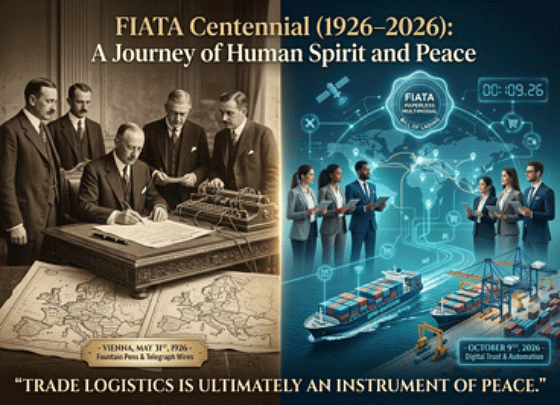
One hundred years ago, in the late spring of 1926, sixteen men sat in a meeting room in Vienna and I was one of them. We did not have microchips, satellite constellations, or the ability to track a parcel across the globe by pressing a button. We had fountain pens and telegraph wires… and a shared, distressing realisation: if the fractured, war-torn nations of the world were ever to return to their pre-war affluence and dynamism, they would need an architecture for trade to bridge their divisions by improving trade practices.
It was May 31st 1926, on that day, in that room we founded the ‘Fédération Internationale des Associations de Transitaires et Assimilés’, being French the prevailing diplomatic language at the time. We wanted to build a lifeline for a broken continent, not a monument to global commerce, as Europe was still, or better still considered itself to be, the centre of the world. I realise today how much things have changed since.
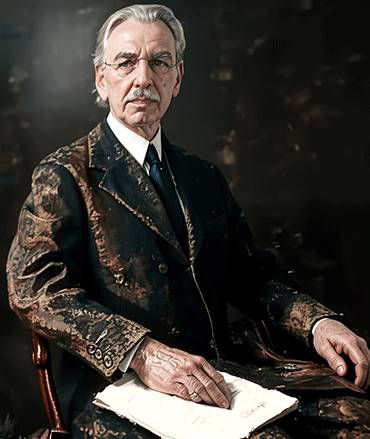 Today, as I stand before this magnificent General Assembly in Milan and read your Centennial Declaration, I am filled with a profound and humbling awe. I am thankful to Fedespedi, one of our founding members, for the excellent organisation of this reunion. What began as a defensive alliance of European associations has blossomed into a global federation representing over 40,000 forwarding firms across 150 nations, where Europe is no longer predominant in global trade.
You have truly become what we only dared dream of: the indispensable architectural pillar of modern, global trade. It is not easy to tell how much of this progress depends on the strides made by FIATA, as compared to the natural propensity of its members to follow the constant flow of the goods traded from the seller to its customer, i.e. the originator of the trade, as it has been designated in recent times.
When I look at our achievements over the past century I see the ultimate realisation of our original mission, adapted to a world with an unimaginable scale. We fought for decades to standardise paper documents so that a Customs clerk in Trieste could understand a manifest written in Budapest, Antwerp or New York. You have taken that fight into the ether, by implementing the FIATA Paperless Multimodal Bill of Lading and other contemporary standards, contributing to establish a mutual digital trust among supply chain stakeholders. You have liberated the merchant from the tyranny of ‘lost papers’, ensuring that data moves faster than the cargo itself. It is for the shipper now to avail itself of this unique opportunity with your assistance.
 |
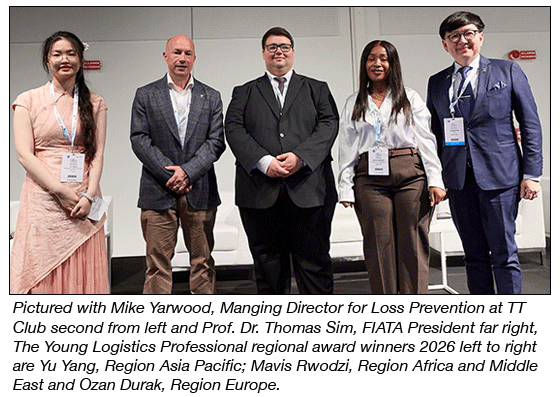
As I look out across this vast hall, I see many distinguished delegates, but my eyes are drawn to the faces of the Young Logistics Professionals gathered here today, to the finalists of the YLP Global Award and to each and every young mind who has travelled to Milan: I want you to understand something vital about FIATA: its complex history, which must remain well known and celebrated, together with its vitality to evolve facing future challenges. In 1926, we were not recognised, comfortable industry titans, we were visionaries with intuition and imagination; we were fighting against a rigid, outdated post-wartime status quo, trying to convince the transport and trade community that the old methods, locally established by ambitions that seldom came to fruition, were . . . dead, period.
You are the modern inheritors of that exact, pioneering spirit. This is a turning point where our dreams can come to fruition now, provided you keep record of our expectations, yesterday and today. Without the memory of its past, FIATA stops being a unique organisation and runs the risk of being just another voice in a chorus of many others, disordered and troubled by today’s tensions. The Centennial Declaration accurately notes that the world in 2026 remains extremely volatile. Youare facing geopolitical chokepoints in vital maritime straits, cyber vulnerabilities that can paralyse ports or terminals and the existential mandate to help decarbonise global logistics. Senior executives may look at these challenges with disillusionment, but I am looking at you, our young professionals. You possess the one asset the veterans have not: your completely unburdened mind. You need no reset in order to look at your work in a new, genuine way; instead you look at the great examples of the past to assist you in your climb. And I see you have the wisdom to treasure such examples without considering them a burden to get rid of.
Operationalising sustainability, optimising carbon-neutral lanes, mastering artificial intelligence and more: daunting challenges… in my time we could not even imagine these ideas, but what was not achieved by my generation, or even the generation that preceded yours, can become your own success statement. You are the first generation of logistics professionals who do not see sustainability as a regulatory box to check, but as a fundamental operating principle to create a better future for everybody.
As you progressively take the reins of this great Federation, remember the lessons of 1926: when the European founders sat at our inaugural table, their nations had spent many years in a devastating war. They put aside national grief and political borders because they understood a fundamental truth: trade logistics is ultimately an instrument of peace. Cooperation is a founding element of success, whilst the attempt to prevail on your neighbour at any cost, may just produce precisely that: cost, with no compensation for anyone in the long run.
When you solve a supply chain crisis, when you leverage technology to open a new corridor for traders, when you deliver medical supplies to a crisis zone, you are not merely moving freight, you are weaving the fabric of human civilisation tighter together. Tools will change. Artificial intelligence will optimise your routes, and automation will lift your containers, but the heartbeat of our industry will always be the restless, problem-solving human spirit of the freight forwarder: the person who looks at chaos and, banking on previous experience and fresh imagination, sees an opportunity to build a new bridge.
 |
To you, the Young Logistics Professionals, let me tell you: do not wait for permission to lead, step forward, challenge the old paradigms as we did in Vienna a century ago, in particular those disguising short-sighted personal ambitions as ground-breaking objectives, in the vain expectation that innovation can fit mediocrity. It can’t. Just rearranging the order of the same words will not suffice in the times that are coming: you will be asked to invent a completely new logistics language, but I know that our future is in good hands. You have given ample evidence that your intuition will not remain on the surface. Please guard the integrity of this Federation, champion the collaboration that has sustained us in the past century, keep the world moving, with honour, with unity, and with courage. Thank you for your enthusiasm, and may FIATA endure forever with your enthusiasm and the experience of your predecessors!
Following Mr. Lehmann’s forward looking address, Imagination pulled a virtual rostrum together, to give voice to the geographical architects who signed the charter in Vienna 100 years ago: the Trieste Delegation from Italy said that "the Adriatic deep water gateway of Trieste navigated the highly complex transition of a vital maritime port, after the redrawing of empire borders, look upon your seamless modern multimodal corridors as the ultimate fulfilment of our original maritime promise." The Vienna Delegation, said that "As the hosts of the establishment, the Zentralverband der Spediteure and the Allgemeiner Möbeltransportverband in Vienna, we look upon this massive, 150-nation global assembly and know that the seed planted in our smoke-filled rooms a century ago has successfully maintained the world's commerce vital and in perfect shape." Other founders’ delegations celebrated the “clean data flow and fully optimised supply chain lanes” as well as the “absolute legal certainty achieved by the digital bill of lading, a magnificent transformation of our original ocean transport charters."
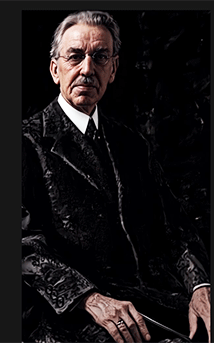 
A Special Commemorative Dialogue with Mr. Paul Lehmann, Founder and First President of FIATA, took place immediately after the Centennial General Assembly at Biblioteca Ambrosiana in Milan and was hosted by Publisher Geoffrey Arend.
Geoffrey Arend: Mr. Lehmann, to look at you, one wouldn't suspect you witnessed the fallout of the First World War or signed documents using a fountain pen dipped in permanent iron gall ink. Yet here you are, sitting in Milan, exactly one hundred years after you and sixteen European delegates gathered to establish the Fédération Internationale des Associations de Transitaires et Assimilés—FIATA. Welcome back!
Paul Lehmann: Thank you, Geoffrey. It is a surreal sensation, I must admit. When we sat in that room in Vienna in 1926, we were trying to prevent local Customs agents from seizing timber carts and rail carriages caught in the regulatory crossfire of newly drawn European borders. If you had told me that a century later I would be sitting in a climate-controlled monolith in Lombardy, discussing "digital twins" and "decarbonization," I would have assumed you had consumed too much absinthe.
Geoffrey Arend: Mr. Lehmann, as we sit here under the banner of the 2026 Milan Congress, the atmosphere is one of polished corporate synergy in the usual genteel FIATA discourse. But looking back at the list of the sixteen original European organizations that gathered in Vienna on May 31, 1926, it feels much more localized, fractured, even raw. Can you tell us about the actual men who shared that, as you put it, ‘smoke-filled room’ with you?
Paul Lehmann: Ah, the pioneers! People today read the history and just see a dry list of names: the Zentralverband der Spediteure from Vienna, the Federation Nationale des Entrepreneurs de Transport de Belgique from Antwerp, or the delegates from the Udruženje Speditera in Zagreb, and the other, distinguished delegates. But to me, they were real, desperate men fighting an uphill battle with a shattered continent, with prices going up and down wildly. Europe was still bleeding from the open wounds of the Great War. Traditional empires had collapsed, leaving raw, jagged borders right across the established trade routes that struggled to remain in use.
Arend: It sounds like the foundation wasn't born out of abstract idealism, but out of absolute survival.
Lehmann: Utterly so. I remember a heated argument between the Austrian delegates and the Czech representatives from Prague. Before the war, they were part of the Austro Hungarian Empire but in 1926, moving a single household from Vienna to Prague required navigating two entirely different sets of liability laws, probably arbitrary security deposits at the border. The Czech were proud of their new republic, but they also knew that economic isolation meant ruin: they argued that a forwarder shouldn't lose its entire investment simply because a wagon crossed an imaginary line on a map and fell under a different legal code. That argument right there was the exact moment the seed for a uniform, global FIATA Forwarding Instructions (FFI) and standard liability rules was truly planted. It would take decades to see the fruits, but that was the beginning.
Arend: Did the Nordic or Western European delegates bring a different energy to the table?
Lehmann: They brought the reality of global maritime trade, different from the rail oriented central Europeans. The delegates from Antwerp and other colleagues from the Netherlands and the United Kingdom looked at the continental Europeans and basically said: "Your border issues are real, but so is the real world, moving across the three oceans, in a different dimension." They were dealing with international shipping lines. In 1926, if a shipping line lost your crate in the middle of the Atlantic, its liability limits were not always certain, at times the forwarder and the merchant risked bankruptcy. The British and Dutch delegates insisted that FIATA could not just be a European continental committee, it had to become a federated global entity that could stand up to the ocean liners and port authorities. They demanded a standard document that carried weight across the ocean. One century later, that demand has evolved into the FIATA Paperless Multimodal Bill of Lading you are celebrating today. The FBL remains the only recognized multimodal document of title!
Arend: Hearing these anecdotes makes the modern concept of "global collaboration" feel much less like a corporate buzzword and more like a hard-won peace treaty.
Lehmann: It was a peace treaty indeed, Geoffrey. We had Brits, Austrians, Germans, Poles, Croats, Belgians, Italians and more, all sitting at the same table, a mere eight years after their nations had been slaughtering each other on the battlefields and in the trenches of WWI. Logistics was the bridge that forced them to speak to one another again. When we signed that charter, we weren't just creating an association: we were proving that commerce and the shared expertise of moving goods could heal a broken world faster than any politician could.
Arend: You’ve had a chance to read the Centennial Declaration fresh off the press here at the Milan Congress. What was your immediate visceral reaction to seeing what your creation has become?
Lehmann: A profound sense of scale, mixed with a strange familiarity. The Declaration talks about the "indispensable architectural pillar of global commerce". We didn't view ourselves as architects of a grand global machine back then; we were more like plumbers trying to fix leaks in a shattered pipe network. The 1920s were defined by fragmentation and distrust. To see FIATA today representing over 40,000 forwarders across 150 nations—standing unified as the absolute voice of logistics—is staggering. But what struck me most deeply about the Declaration is its core admission: despite our brilliant machines, the world remains terrifyingly volatile.
Arend: The Declaration heavily highlights recent geopolitical disruptions—specifically the ongoing tensions reshaping traditional corridors like the Strait of Hormuz and the Suez Canal, prompting the need for rapid multimodal alternatives. How does that shake your 1926 perspective?
Lehmann: In 1926, our disruptions were local but utterly debilitating. The Austro-Hungarian Empire had dissolved, the Russian Empire had dissolved, Germany was at a crossroads, etc. The first wave of globalization between 800 and 900 was defunct, murdered by a war without respite. If a train travelled from Budapest to Trieste, it was now obliged to cross multiple jurisdictions, each demanding bespoke paper manifests, differing currencies, and arbitrary tariffs. It was taking days just to clear a single rail wagon! Today, this sounds uncanny, but you face disruptions on a planetary scale. A single drone strike or regional skirmish thousands of miles away forces a ship carrying ten thousand containers to divert around the Cape of Good Hope, altering the retail prices of consumer goods in Chicago or Berlin within forty-eight hours. Yet, the forwarder’s role remains identical: we are still the shock absorbers of history. Our facilitations function despite each and every challenge.
Arend: Let’s talk about the mechanics of the trade. The Milan Congress featured intense panels regarding the "Digital Age" and "Enabling Better Business Through Digital Trust". FIATA has aggressively pushed its paperless Bill of Lading, aiming for absolute data interoperability. How does this compare to the administrative reality of your presidency?
Lehmann: Geoffrey, my world was built on the tactile snap of heavy parchment and the distinct scent of ink pads. A freight forwarder’s primary asset in 1926 was his physical archive. A lost Bill of Lading meant weeks of telegrams, affidavits, and ships sitting idle at dockside, accumulating ruinous demurrage fees. We dreamed of a standardized document because every port had its own vocabulary, its own liability rules and sometimes these rules could sound odd or even arbitrary.
Arend: And now we have the FIATA Paperless Multimodal Bill of Lading . . .
Lehmann: It is spectacular, yet it fills me with an existential irony. The Milan Declaration stresses "digital trust". In my day, trust was an intimate, local commodity. You trusted a man because you knew his family, or because you shook his hand once at the stock exchange. Today, you trade across continents with entities you will never see, relying on cryptographic keys to prove authenticity. It is an astonishing achievement—clearing Customs via a single digital window without a single leaf of paper changing hands. Yet, the vulnerabilities are terrifying: we worried about rain damaging our logbooks or a clerk misplacing a ledger. You have to worry about unseen syndicates halfway across the world locking down entire port terminals with ransomware. Your risks are invisible, which makes them even more threatening.
Arend: The Milan Congress also unveiled a new Practical User Handbook on Multimodal Transport Corridors, focusing heavily on the Middle Corridor as a case study. You were highly focused on rail and sea connectivity. Does the modern concept of "multi-modalism" surprise you?
Lehmann: The concept doesn't surprise me, but the synchronization does. In 1926, shifting cargo from a rail car to a steamship was a chaotic, manual ballet. It required stevedores, cranes, rope nets and hours of physical force. The cargo was loose: barrels of flour, crates of machine components, sacks of grain, tons and tons of coal . . . The idea of the modern intermodal container is the true prodigy of contemporary logistics. In my opinion the container is the change that has enabled our quick progress in the second half of the 20th century. But nothing would move without agreements; the Middle Corridor isn't just a route: it's a testament to diplomatic endurance. We struggled to align three neighbouring countries, but here it is. FIATA today is helping orchestrate harmony across entire continents to bypass geopolitical chokepoints.
Arend: An important focal point of the Centennial Declaration is the "operationalization of sustainability". The logistics industry is under immense pressure to decarbonize . . . any language would do. In 1926, the industrial revolution was still celebrated without reservation. Was environmental impact even a shadow on your radar?
Lehmann: Heavily speaking? Not at all. In 1926, black smoke billowing from a locomotive or a steamship funnel was the very symbol of prosperity, employment, and progress. It meant the gears of the world were turning again after the stagnation of the Great War. We burned coal with abandon. The oceans felt infinite, a highway that could absorb whatever grease and ash we threw into it. Now we know how damaging our work can become if not appropriately conducted. Petroleum is still strong, but it is clear enough that those who will be able to tame the wild power of the sun and the other natural elements to produce energy will hold the key to future progress.
Arend: And today, the industry is confronting its status as one of the largest carbon contributors, striving for net-zero targets.
Lehmann: It is a profound moral and industrial shift. To read in the Milan Declaration that forwarders must take ownership of emissions and actively choose green corridors is a level of global citizenship we simply couldn't conceive 100 years ago. The modern forwarder must balance the ledger of profit against the ledger of the planet. I walked through the Milan exhibition hall and saw companies presenting electric freight trucks, hydrogen-powered vessels, and mathematical models to minimize empty container repositioning. It is no longer enough to move goods swiftly: you must move them cleanly, i.e. more efficiently. This is the greatest divergence from 1926. We were trying to exploit the earth to rebuild civilization; you are trying to preserve the planet to sustain it!
Arend: During this centenary, the Young Logistics Professionals (YLP) Global Award was presented right here in Milan. When you look at the human element of logistics today, what do you see?
Lehmann: I see the exact same spark. Tools change, Geoffrey: we used the telegraph, you use artificial intelligence. We used horses to pull drays from the rail stations, you use electric delivery fleets. But the psychological makeup of a freight forwarder remains entirely unchanged. It requires a specific type of mind to excel in this trade: a restless, problem-solving intellect that looks at a closed border, a stranded vessel, or a cancelled flight, and doesn't see a dead end: it sees a puzzle to be solved.
Arend: If you could leave the global logistics community of 2126, one hundred years from this moment, with one foundational piece of advice from the architect of 1926, what would it be?
Lehmann: Do not let machines resolve the human relationship. The strength of FIATA has always been its fellowship, the understanding that an international network of local experts will always outperform an isolated giant. Whether you are tracking cargo across the stars or under the sea, remember that logistics is, at its root, a service to the community. We feed cities, we supply hospitals, we connect cultures. That responsibility is our mission. It cannot change even 100 years on.
Arend: Mr. Lehmann, thank you for walking across the centuries to join us.
Lehmann: The pleasure was entirely mine, Geoffrey. Now, if you will excuse me, I notice the delegates are heading toward the Gala Dinner at the Leonardo da Vinci Museum. I hear they are serving exceptional Italian food, and that is one advancement I intend to sample immediately. Please join us! |
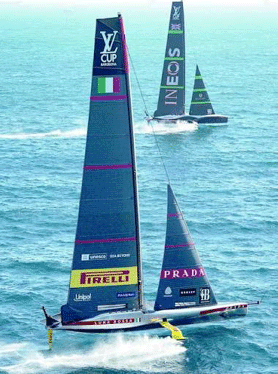 So we all gathered under the most iconic sails that Italy has put on the seas in the last decades, those of Luna Rossa, the futuristic outline of its keel, some of us dreaming of its evocative appellation, which means Red Moon. That was a superlative aperitif with guests arriving in their tuxedoes, high heels and sparkling gowns.
The food was superb and the atmosphere was magic. Thanks and kudos to FIATA for this exceptional celebration and to Fedespedi for taking these legendary arrangements for our community.
Freight forwarders had found eventually the recognition that they deserve, this extraordinary conclusion, 100 years further along in history and this was made possible by all elements made available at the right time, in good conditions and fulfilling the expectations to keep the customers satisfied . . .
These words ring a bell! We have heard these expressions so many times, yet they have an echo that I remember quite well. When I started in CLECAT in 2003 I lamented the fact that the EU Commission was not able to appropriately recognise the value of our work because they wanted “a definition” to do so and there was none which had been agreed upon. I spoke to our Steering Committee, and in no time they persuaded FIATA’s reluctant lawyers to approve of the ‘description’ of our services that was written by Colin Beaumont of BIFA. The lawyers were afraid that a ‘definition’ would require an undefined legal process and entail legal liabilities that the sector had no need to accept. The description as provided there and then was the Columbus’s egg of the situation and still holds its place on FIATA’s website today: “Freight forwarding and logistic services" are services of any kind relating to the carriage (performed by single mode or multimodal transport means), consolidation, storage, handling, packing or distribution of  goods, as well as ancillary and advisory services in connection therewith, including but not limited to customs and fiscal matters, declaring the goods for official purposes, procuring insurance of the goods and collecting or procuring payment or documents relating to the goods. Freight forwarding services also include logistic services with modern information and communication technology in connection with the carriage, handling or storage of the goods, and de facto total supply chain management. These services can be tailored to meet the flexible application of the services provided.”
After all the imagination we used in these pages, I am leaving with this historical and true anecdote, together with the bright picture of another Luna Rossa, in which is enshrined the song that Naples wrote to celebrate the rise of the mythical satellite in the sky of the city placidly resting at the foot of the Vesuvius.
After listening to the sweet melancholy of this song, I asked Imagination one last question: who could be trying to impede the progress of freight forwarders under the aegis of FIATA? and the answer was: “Ccà nun ce sta nisciuna”: there is nobody . . .
Marco Leonardo Sorgetti
|




 Vol. 25 No. 40
 Vol. 25 No. 41
 Vol. 25 No. 42


 100%
Green