Here is a brief look ahead. Just for you.
Today we’re jumping in with hands, hearts and heads first into content and thoughts before the show starts next week in Miami, Florida, setting our table where the Miami Beach Convention Center is about to turn into a crossroads for the global air cargo world.
The TIACA Air Cargo Forum runs October 26th through the 29th, and this year it feels like more than just another trade event.
It’s a moment where the industry gets to look forward and, at the same time, take stock of the people and decisions that shaped the last few years.
It feels with so much driving change on so many levels, this event could host and also be the start of something big.
Next week in Miami are recognizable names in U.S. air cargo—Jan Krems, Brandon Fried, and Glyn Hughes—all could be in the same place at the same time, possibly even showing up alongside the people who now have stepped into their roles.
 |
Jan Krems (retired) led United Airlines Cargo for more than 12 years, and during that time United Cargo didn’t just grow—it separated itself from the pack. The way people talk about it, he helped turn United’s cargo arm into a top-tier global competitor, and the revenue performance climbed to about double what the nearest U.S. competitor was doing.
Krems’ legacy is going to stay in the conversation for a long time. During the pandemic, United got aggressive and creative with cargo-only flights using passenger aircraft. That sounds obvious now, but in the moment, it required fast decisions, operational flexibility, and the willingness to reimagine what the network could do.
United operated more than 17,000 of these cargo-only flights. Think about what that means: while people were grounded, supply chains still needed to breathe. PPE, pharma, e-commerce, industrial parts—everything that couldn’t wait. Those flights helped keep goods moving and also brought in critical revenue at a time when traditional passenger income was under severe pressure.
So when people talk about resilience in aviation logistics, the name Krems and United Cargo is forever linked to those case studies.
Now, where over 90% of airline cargo business resides, we go shifting from airline leadership to the forwarder side—Brandon Fried.
Different lane, but massive influence.
Brandon Fried became the face of the Airforwarders Association in Washington, D.C. and his timeline there tells you something. He started serving on the board in 2001 and then took on the executive director role in 2005. He held that leadership position for 21 years. That kind of continuity is rare, especially in an industry where regulations, security rules, trade policy, and technology all keep shifting.
Brandon stepped up after Jim Foster, the AfA founder passed away and for forwarders—who often sit in the middle of shippers, airlines, handlers, regulators—advocacy isn’t a side project.
Brandon’s job for two decades plus representing that community, shaping policy conversations, and keeping members aligned was huge and complex and in retrospect almost unreal.
Frankly speaking, the way he kept the AfA together and tracking positive given the challenges of that task—all in all could make someone else cry.
Now let’s go global.
Glyn Hughes is a name many people connect with IATA first, and then TIACA.
Glyn’s air cargo resume spans decades. He joined IATA back in 1991, and later he became IATA’s Global Head of Cargo from mid-2014 through January 2021.
Then, in February 2021, Glyn picked up his sword and took on a new kind of challenge as the first Director General of TIACA.
At TIACA, DG Glyn defined that job.
Building expectations, shaping how the organization shows up in the industry, and translating a broad membership into actionable priorities Worth noting is, that Glyn did all of this coming out of the most disruptive period in modern aviation while the industry is still trying to normalize. That’s not an easy runway. So at this upcoming Air Cargo Forum in Miami next week, we may have these three leaders—airline cargo, forwarder advocacy, and international association leadership—all in the same orbit. Which makes me wonder: what will the big themes be? What are people going to be debating in hallways between sessions?
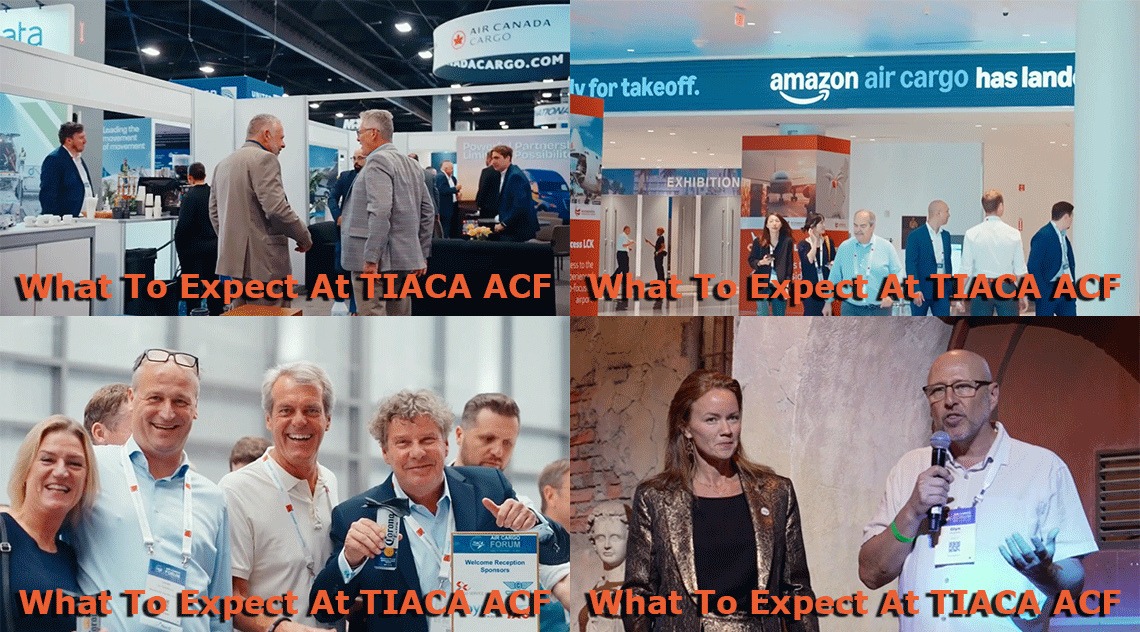
TIACA Air Cargo Forum isn’t just about exhibits. It’s where the industry argues politely about capacity, rates, digitalization, sustainability targets, security requirements, and the next disruption no one wants but everyone expects.
This year, I think there’s an added layer: what kind of leadership does the next era demand?
A publishing note: interviews coming here next week are going to be offering up close and personal views directly from the new leaders—Chris Busch, (United) Steve Smith, (AfA) and Mammen Tharakan—(TIACA) about what they’re walking into and what they want to change.
Meantime as we look ahead, Mike White joins us to share some thoughts of air cargo.
Mike, who served as President of Cargo Network Services (CNS)-reputation in air cargo comes from bridging worlds: airlines and forwarders, strategy and operations, the present-day grind and the future that’s arriving fast.
Pleased to report with Mike scheduled at TIACA ACF in Miami next week, it’s a good reminder that the industry moves forward through people who can connect ideas to execution.
Here Mike shares some further thought:
“The global air cargo industry is entering what I believe will be one of the most consequential periods of transformation in its history.
“As we recognize the contributions of respected industry leaders such as Jan Krems, Brandon Fried, and Glyn Hughes, we should also recognize that the industry they helped shape is changing rapidly.
“Their experience, leadership, and commitment have contributed significantly to the progress we have made.
“But the next chapter will demand a new level of adaptability, innovation, collaboration, and strategic thinking.
 |
“Government regulations, tariffs, shifting trade policies, geopolitical uncertainty, and changing economic conditions are reshaping global supply chains. Traditional trade lanes are being challenged, new manufacturing centers are emerging, and airlines and freight forwarders are reassessing capacity deployment, network strategies, and long-term investments. Some markets are experiencing declining volumes, while others are generating new opportunities. The challenge is no longer simply moving freight from one point to another. It is anticipating where global commerce is headed and positioning our industry to support it.”
“Over the next three to five years, I believe we will see a significant realignment of global air cargo networks. Southeast Asia, India, and other developing manufacturing and distribution centers will play increasingly important roles. E-commerce will continue to evolve, while pharmaceuticals, semiconductors, high-value technology, aerospace, and other time-sensitive commodities will create opportunities for specialized services.
“At the same time, capacity management will become increasingly critical.
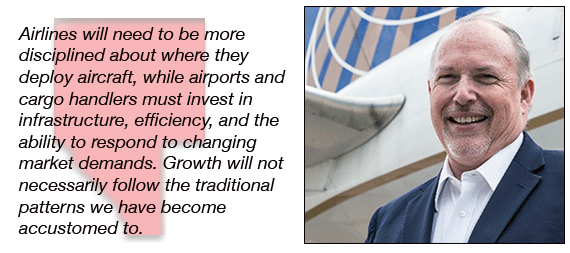
“Airlines will need to be more disciplined about where they deploy aircraft, while airports and cargo handlers must invest in infrastructure, efficiency, and the ability to respond to changing market demands. Growth will not necessarily follow the traditional patterns we have become accustomed to.
“Artificial intelligence and technology will be among the most powerful forces shaping this transformation. AI, predictive analytics, automation, digital documentation, and real-time shipment visibility will change how we forecast demand, manage capacity, clear customs, handle cargo, and serve customers. But I would caution our industry against believing that technology alone is the answer. Technology should strengthen our ability to make decisions, improve service, and create efficiencies. It should never replace the relationships, trust, experience, and personal accountability that have always been the foundation of this business. The companies that successfully combine advanced technology with knowledgeable, experienced people will have a distinct competitive advantage.
“I also believe we must become more proactive in our relationships with governments and regulatory authorities. Too often, our industry finds itself reacting to regulations rather than helping shape the conversations that lead to them. Air cargo is a critical component of global commerce, economic development, national competitiveness, and supply chain resilience. We need stronger industry advocacy, greater collaboration among airlines, forwarders, airports, handlers, and government agencies, and a unified commitment to making international trade more efficient and predictable. Our voice must be heard before decisions are made, not simply after their consequences are felt.”
Perhaps the greatest opportunity ahead, however, is developing the next generation of industry leadership. We have benefited tremendously from individuals who dedicated their careers to building organizations, strengthening industry associations, improving standards, and bringing people together. As experienced leaders move into new chapters of their lives, we have a responsibility to mentor emerging professionals, attract new talent, and create an environment where fresh ideas are encouraged. The future of air cargo will require leaders who understand both the operational realities of this business and the rapidly changing technological and economic environment in which it operates.
“I remain extremely optimistic about the future of air cargo, but optimism must be accompanied by action. We cannot continue to operate with yesterday’s thinking while expecting to succeed in tomorrow’s marketplace. We must be willing to challenge established practices, embrace meaningful innovation, invest in our people, and recognize that the industry’s greatest growth opportunities may come from places and technologies we are only beginning to understand.
“My prediction is that the next five years will create a clear distinction between organizations that simply respond to change and those that anticipate it. The winners will be those who are agile, technologically capable, customer-focused, and willing to collaborate across traditional industry boundaries.
“We should never underestimate the contributions of those who helped build this industry. But honoring their legacy means preparing the next generation of leaders to take air cargo further than any of us imagined possible.
“The future of air cargo will not be defined by how well we preserve the past, that we should always respect and pay attention to, but by how boldly we prepare for what comes next,” Mike White concluded.”
Thanks, Mike. This gentleman is one of our most important thought leaders in air cargo.
Geoffrey Arend
|




 Vol. 25 No. 41
 Vol. 25 No. 42
 Vol. 25 No. 43


 100%
Green