 |
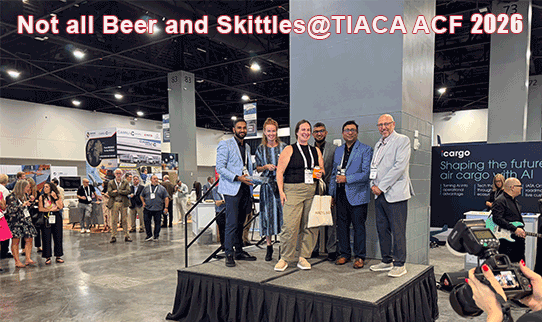
There are lots of pictures all over social media from the Air Cargo Forum in Miami last week, (in these pages too). Big smiles, handshakes, that warm feeling of being together. There’s even a German word for that kind of comfortable, friendly atmosphere: Gemütlichkeit.
On day one that vibe was real. Strong turnout, busy booths, a packed show floor. Tuesday, October 27, the place felt alive inside that huge Miami Beach Convention Center.
But then came the flip side. Because life isn’t, as the saying goes, “all beer and skittles.” Not everything is easy or carefree, especially when you’re running or exhibiting at a trade show where time and money are on the line.
The second day felt noticeably different. Attendance thinned out, and people on the exhibitor side started describing the aisles in a way you don’t usually hear as a positive.
One booth team told us the space in front of them felt like a superhighway, lanes that were just wide and open, with not enough feet on the floor.
Another practical complaint came up again and again: navigation.
Attendees and exhibitors pointed to signage that simply didn’t do enough to help people find booths quickly.
Booth numbers weren’t elevated or easy to spot from a distance.
If you’ve ever wandered a convention hall, you know how basic that is. If you can’t orient yourself in seconds, you lose momentum.
Another gripe: aisle signage placement. Signs were posted high up, mixed in with structural columns showing other numbers, instead of being front and clear, where you naturally look when you’re trying to get your bearings.
The biggest point of discussion was the decision to charge walk-in attendees a per-person fee just to access the show floor.
Trade shows do charge fees sometimes, sure. We talked to someone who follows this part of the business closely, and they didn’t deny that fees are common in today’s event world.
Their argument was sharper: even if you collect that money, it’s usually one of the smallest revenue streams.
In other words, the loss of attendance might cost more than the fee might bring in.
They went further and basically said: the entrance-fee income here was probably negligible, and not worth the effort. And if that’s true, then the question becomes simple. Why add a barrier at the door at all?
For perspective here, the Miami Beach Convention Center often hosts truly massive events.
In that ecosystem, a niche industry gathering can feel small, even if it means a lot to the industry itself.
That contrast showed up in other small frustrations, exhibitors talked about. Things you might not think about unless you’re the person paying for a booth and trying to create a welcoming space.
Like not being able to easily get adequate maintenance help when something needed fixing. Or struggling to source live plants or floral arrangements to make a booth feel inviting.
None of these issues alone affects an event. But put them together: lighter foot traffic on days two and three, unclear booth signage, and an entrance fee that perhaps held down attendance.
But for ACF 2026 all indeed was not a doom-and-gloom story. Plenty of participants genuinely enjoyed the forum. You could see it in those photos and in the conversations that went well.
So the real takeaway here is forward-looking. These are fixable issues. Event organizers can make it easier to navigate. They can think hard about whether a walk-in fee helps or hurts. They can tighten support on the floor so exhibitors aren’t chasing basics.
Air Cargo in Miami is a serious engine of commerce, and it’s tied to the city’s future. When you host an air cargo event there, expectations are naturally high.
The next Miami edition is roughly two years out. There’s plenty of time to act.
That’s a long runway, which is good news. Time to keep what worked, listen to what didn’t, and make the experience better for everyone exhibiting and walking those aisles next time.
GDA/SSA |




 Vol. 25 No. 46
 Vol. 25 No. 47
 Vol. 25 No. 48


 100%
Green