 |
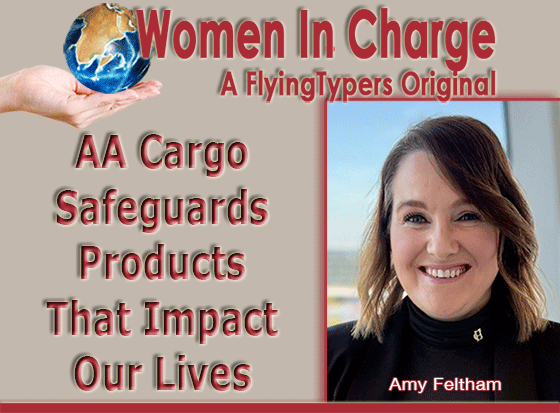
American Airlines gave us the opportunity to interact with one of their executive professionals, active in a special area of air cargo, TC and life sciences. Amy Feltham is a senior commercial leader with more than 20 years' experience across aviation, air cargo, healthcare logistics, sales leadership, operational management and customer experience. We asked Amy some crafty questions and her answers are always interesting, to say the least.
Currently serving as Senior Account Manager, Life Sciences and Healthcare Logistics for American Airlines Cargo, Amy Feltham is responsible for developing strategic healthcare partnerships, driving commercial growth, and advancing temperature-controlled logistics solutions across global markets.
This is a rather special area of air cargo, and crucial for everybody on this planet as well as one of the most technically exposed. Amy is also a trusted relationship builder and industry advocate, with extensive experience influencing senior stakeholders, leading regional initiatives, driving product adoption, and supporting global healthcare logistics strategies within one of the world's largest airline cargo networks. Another trait which is worth noticing, Amy built her career inside American Airlines from the UK, climbing her way upwards since 2008, starting from security . . . Were this description insufficient to entice you to read this dialogue, well, there’s much more than that! Your curiosity will not be disappointed, trust me.
FT: In your presentation, you use the expression "advancing temperature-controlled logistics solutions." With your considerable experience in pharma and TC distribution, what is the single most conclusive element in deciding which solution you propose when approaching a new customer?
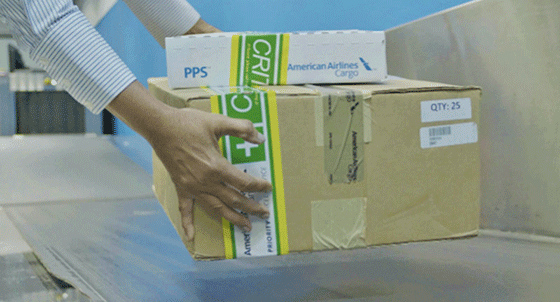
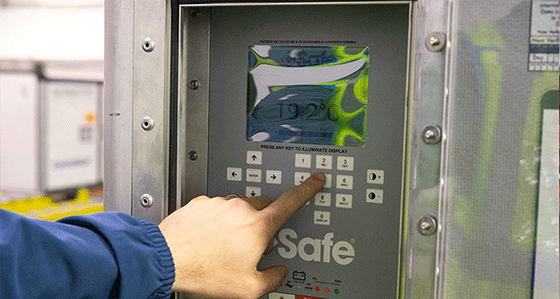
AF: There is rarely a one-size-fits-all solution in temperature-controlled logistics. If I had to identify the single most important factor, it would be the product's temperature stability profile and risk tolerance. Everything else follows from that. Understanding the sensitivity of the product, the acceptable temperature range, transit times, seasonal considerations and lane complexity allows us to recommend the most appropriate solution. My approach is always consultative. Rather than leading with a product, I start by understanding the customer's requirements, the regulatory environment and the potential risks involved. The goal is to provide a solution that protects product integrity while remaining operationally practical and commercially sustainable.
FT: Thank you, you explain so well that you make a complex decision sound so simple! Next: you describe "ensuring alignment on product positioning and compliance requirements" as part of the work of the ExpediteTC Champions initiative you are leading. Could you briefly describe the strategy behind this achievement?
AF: The strategy is centred around creating a network of informed advocates across the organisation. In large global businesses, information can sometimes become fragmented between sales, operations, customer service, product and compliance teams. Our ExpediteTC Champions initiative is designed to bridge those gaps by establishing local subject matter experts who act as a conduit between central product teams and regional stakeholders. This helps ensure everyone communicates a consistent message to customers, understands the capabilities of our products and remains aligned with compliance and operational requirements. Ultimately, alignment improves the customer experience because customers receive consistent information regardless of where they engage with American Airlines Cargo.
 |
FT: Your answer rings a bell . . . I remember an old friend of mine saying that working with air cargo messaging was like “Chinese whispers”, as the final message received was never precisely corresponding with the one that had been sent. This problem does not exist with your system and this is guaranteed by somebody who interacts with you directly. In addition, you state that you "deliver training and knowledge-sharing sessions across global teams to strengthen healthcare logistics expertise." Could you expand on this concept?
AF: Knowledge sharing is a key element of my role, although I would describe it less as formal training and more as creating opportunities for teams to learn from one another and develop a deeper understanding of healthcare logistics. Much of this involves facilitating discussions around customer requirements, industry best practices, regulatory expectations, temperature-controlled solutions and emerging market trends. These sessions provide a platform for colleagues to share experiences, discuss challenges and exchange practical insights that can be applied in customer engagements. The primary audience is American Airlines Cargo personnel, particularly Commercial teams and stakeholders involved in supporting healthcare and life sciences customers. However, knowledge-sharing opportunities often involve collaboration with external partners, including freight forwarders, container providers and industry specialists, as these perspectives help broaden understanding and strengthen our collective expertise. Rather than following a fixed curriculum, these sessions are typically organised around business needs, product development, customer opportunities or industry changes. The ultimate objective is to ensure teams remain informed, connected and equipped to have meaningful conversations with customers while continuing to strengthen our healthcare logistics capabilities.
FT: Very interesting: it is like building an ecosystem of partners working to achieve the advancement of knowledge . . . This seems to connect with the early part of your career, when you were dealing with training issues as well. You also mention freight forwarders: they play a critical role in the healthcare supply chain. How does American Airlines Cargo collaborate with them to support customer needs?
AF: Freight forwarders play a critical role in connecting manufacturers, distributors, airlines and end users across the healthcare supply chain, and they are among our most important customers and strategic partners. We work closely with them on a routine basis to understand their customers' requirements, develop tailored transportation solutions, support growth opportunities and address operational challenges. Where appropriate, we also facilitate tri-partite discussions involving the freight forwarder, shipper and American Airlines Cargo. These conversations help us better understand the shipper's specific needs and requirements, share our healthcare capabilities and jointly develop solutions that support supply chain integrity and customer objectives. The most successful relationships are built on partnership, collaboration and transparency, with all parties working together to improve service quality, reliability and patient-focused outcomes.
 |
FT: Let me delve a bit deeper please. You also state that you manage a portfolio of "strategic freight forwarders." What traits command the "strategic" status?
AF: Revenue is certainly one consideration, but it is not the only one, nor necessarily the most important. Strategic status is typically determined by a combination of factors. These may include market influence, growth potential, commitment to the healthcare sector, operational compatibility, geographic reach, innovation and alignment with our long-term objectives. Safety, quality and compliance are also critical considerations, particularly within healthcare logistics where maintaining product integrity is essential throughout the supply chain.
Strategic relationships often extend across multiple regions and, in many cases, support customers on a global scale. What distinguishes these partnerships is not only their size or market presence, but also a shared commitment to collaboration. We look for customers who value open communication, long-term partnership and a willingness to work together to develop solutions that address evolving business and supply chain needs. Together, these characteristics help create strong, mutually beneficial relationships that support innovation, operational excellence and long-term growth for both organisations.
Amy Feltham seems to be utterly sanitized from the discussion, which exists in other areas of the business (and I consider unhealthy), i.e. forwarders being frequently treated as agents to be vetted, not as airlines’ customers to be valued. Another point on the map of a real forward-looking leader. Let us resume our conversation.
FT: Within your additional regional responsibilities, you mention the implementation of GDP-compliant solutions. Is there a regionalization of GDP-compliant solutions?
AF: The underlying principles of Good Distribution Practice (GDP) remain consistent regardless of geography, including maintaining product quality and integrity throughout the supply chain. However, implementation can vary depending on local regulations, market expectations, infrastructure, customer requirements and operating environments. For example, while the UK and EU have closely aligned GDP expectations, there may be differences in interpretation, documentation requirements or regulatory oversight compared with other regions such as the United States. Therefore, organisations must ensure that global standards are maintained while remaining compliant with applicable regional requirements. The key objective remains the same everywhere: protecting the product and ensuring patient safety.
 |
FT: Very appropriate, thank you. Will you please allow a pushy question? Please tell us why a prospective customer should choose your services over other similar services available in the market.
AF: Customers choose us because we combine a strong global network with dedicated healthcare expertise and a solution-oriented approach. At American Airlines Cargo, that includes leveraging our extensive network, specialised handling capabilities and established healthcare logistics processes to support customers around the world. Temperature-controlled logistics is not simply about moving freight from one point to another: it is about safeguarding products that ultimately impact patient lives. We work closely with customers to understand their unique challenges and provide tailored solutions supported by specialized handling procedures, approved container solutions, temperature-controlled products and experienced teams. In addition, our dedicated 24/7 Control Tower provides oversight and coordination, helping to proactively manage shipments and support customers throughout the shipping process. One example would be supporting a pharmaceutical customer shipping high-value, temperature-sensitive products across multiple international markets. Success depends not only on transportation capacity but also on planning, risk mitigation, proactive communication and collaboration between all parties involved. Our role is to bring those elements together into a reliable end-to-end solution.
FT: Amy, can I call you Amy? You ticked all my boxes, thank you! Let me ask you a last, more frivolous question, please. If you were not living in the UK, where would you choose to live?
AF: Having spent my career working with global customers and colleagues, I have developed an appreciation for many different cultures and locations. If I were not living in the UK, I would likely choose somewhere that combines international connectivity with a strong life sciences and logistics ecosystem. The Netherlands would certainly be high on my list. It is a major hub for pharmaceutical logistics, innovation and international trade while also offering a high quality of life and a highly collaborative business culture. Through my work, I have spent time engaging with customers and partners across the region and have always appreciated its global outlook and strategic importance within healthcare logistics.
This concludes our conversation with Amy Feltham, American Airlines, which ends with a bit of an after-BREXIT nostalgia. Considering the way in which we end our extremely informative conversation with Any Feltham, I cannot resist citing a song which seems to suit her situation perfectly, if not her feelings, which may in fact be different. Perhaps Amy will tell us in the next interview . . .
Marco Sorgetti |








 Vol. 25 No. 45
 Vol. 25 No. 46
 Vol. 25 No. 47



 100%
Green