TIACA ACF Ad

EMO Trans ad
FlyingTypers Logo
#INTHEAIREVERYWHERE
Feed The Children Ad
   Vol. 25  No. 45                                                                       

Saturday October 24, 2026

linespacer
linkedin
facebook
Instagram
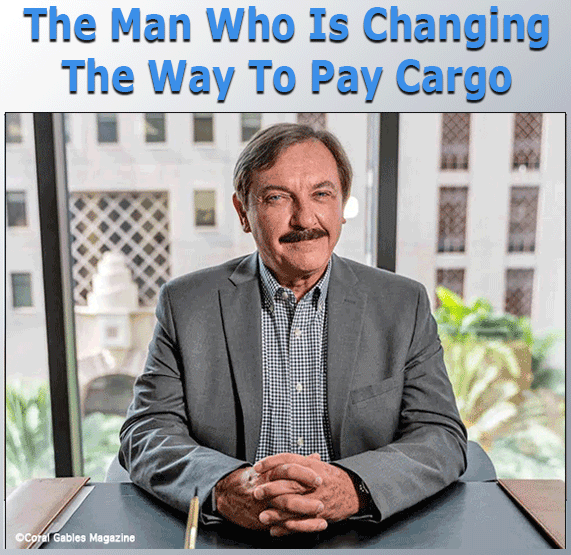
Eduardo Del Riego

     Picture this: a container is finally off the ship or off the main deck or belly of an arriving aircraft, the paperwork is ready, the trucks are staged . . . and then everything stops. It stops for only one reason, the payment hasn’t cleared.
     Often these days we talk about cranes and congestion and labor shortages, but “slow money” can hold cargo hostage just as effectively.
     PayCargo came in as the “payment futurama” nineteen years ago.
     Founded in 2007, by Eduardo Del Riego, current CEO and his team based in Coral Gables, Florida, PayCargo in 2026 is the freight payments backbone for logistics.
     Today tens of thousands of active users are making payments and receiving them, with more joining every month.
     And the platform isn’t stuck in one mode of transportation.
     It’s designed so payers can move money quickly and securely to airlines, ocean carriers, ports, ground handlers, freight forwarders, customs brokers, the whole supply chain ecosystem.
     So the headline isn’t “a payments tool.”
     It’s a network that reduces friction where freight actually gets delayed.
     That’s the vision PayCargo CEO, Eduardo Del Riego, keeps coming back to: modern freight payments that lower transaction costs, speed up cargo release, and make the supply chain more agile. And what’s interesting is how his career kind of foreshadows that mission.
     He didn’t come out of nowhere. He’s been in shipping forever.
     Eduardo started at Crowley Maritime and moved through operations, sales, and management.
     Then he leans entrepreneurial, building and scaling shipping and tech businesses over decades, including shipping agency operations, maritime software, logistics ventures, and investments across the maritime and fintech world.
     So when Eduardo Del Riego talks about bottlenecks, he’s not guessing.
     He’s lived that part: the handoffs, the approvals, the “we sent it yesterday” emails.
PayCargo ACF Booth 436     As the TIACA Air Cargo Forum takes shape next week inside the big Miami Beach Convention Center, PayCargo will be present and on the half shell for all to come visit October 26-29. Here are some thoughts Eduardo shared recently in an interview: “we’re obsessed with physical constraints, but payment processing can be the invisible delay. Cargo can be ready to go, yet it sits because the transaction is crawling through outdated workflows.
     “Which is wild, because in a lot of industries, payment is instant.
     “But in logistics, the stakes are different.
     “One delayed release can trigger storage charges, missed connections, angry customers, and a domino effect.
     “PayCargo positions itself as a neutral bridge. Not a carrier. Not a forwarder. Not a shipper. A connector between them, so money can move directly from payer to vendor using secure banking partners.
     “That “neutral” point matters, because trust is everything.
     “We not trying to be the bank that holds the funds.
     “PayCargo is the technology layer that routes the transaction safely,” Eduardo Del Riego declared.
     In 2026 PayCargo works with huge payers, names you’d recognize from global logistics and retail, and they serve thousands of vendors.
     Their vendor side includes major airlines and the biggest ocean carriers.
     So if you’re a forwarder or a shipper, you’re not asking, “Will the other side accept this?” The other side is probably already on the network.
     That network effect is also why Eduardo says they have an advantage globally.
In plenty of markets, there just isn’t an equivalent, established freight payments network with this kind of adoption.
     But right now, the center of gravity for PayCargo is still North America.
     The vast majority of their volume is in North America but their plan is expansion:
     Western Europe hubs, the Middle East through places like Dubai and Abu Dhabi, and a push across Asia-Pacific.
     “The goal is to make international volume a much bigger slice of the business over the next several years,” Eduardo declared.
     So what about AI you say?
     “All for AI from the get-go," says Eduardo Del Riego.
     “In freight payments: spot-rate shipments change fast.
     “Last-minute messages, updated charges, revised details.”
      Eduardo’s point is that a meaningful chunk of those payments start out wrong because the information changes midstream.
      Which leads to disputes, delays, and people spending their lives reconciling spreadsheets.
     “The PayCargo approach is an AI-driven audit and matching process that lines up what the forwarder thinks they should pay with what the carrier believes they should receive, and it uses the surrounding context, including what’s buried in email threads.”
     What all of that means is that instead of dragging for days, discrepancies can be resolved in minutes.
     “That’s where you see real labor impact. Not AI is cool, but we don’t need 30 people doing manual audits anymore.”
     Integration is another huge plus leveraged by PayCargo AI. “Historically, plugging enterprise systems into a payment network could take months.
     “With AI-assisted workflows, we are talking onboarding and full integration measured in days.”
     Eduardo describes AI writing a significant portion of their software code and handling the vast majority of their testing for security compliance and functionality.
     “The story here is speed: build cycles that used to take half a year can compress into weeks, letting teams spend their time on higher-value work,” he said.
     There’s also a cultural message that Mr. Del Riego keeps repeating: “if you’re leading a company, you can’t treat AI like a side project.”
     He’s blunt about it.
     “Adoption has to become a daily habit, and leadership has to require it, or teams fall behind while the market moves on.”
     Now, one more thread in our story: visibility and ports. Payments don’t live in isolation. Cargo release is connected to knowing where equipment is, how fast it’s moving, what fees apply, and what the real status is.
     That’s why a container-tracking portal developed by PayCargo with a major carrier matters.
     The idea is broad, practical transparency across dozens of U.S. ports and inland points, using cameras and tracking tech.
     “Better visibility helps carriers plan asset needs and automate parts of the fee process, like gates and demurrage,” Eduardo said.
      So while the logistics industry watches peak seasons and shifting trade patterns, you can feel the urgency: when shipping cycles change, delays get expensive fast. No one wants a payment problem stacked on top of a demand surge.
     Which brings us to the part that might be the most important: cybersecurity.
If you’re moving money in global logistics, you are a target.
     Eduardo has said security is “PayCargo’s biggest spending area, with governance at the board level and layered cloud defenses built for sophisticated attacks, including AI-driven threats.
     The resolution of the story with more developments face-to-face with the PayCargo team front and center at TIACA Miami all next week starting October 26 is basically this: make payments fast enough that they stop being a bottleneck, make the system smart enough to fix mistakes quickly, and make it secure enough that trust holds at scale.
     For his part Eduardo Del Riego is looking ahead with a big expectation: crossing the billion-dollar revenue mark within the next several years, going deeper into airline logistics and ocean shipping.
     Before we close, I want to land on his advice to entrepreneurs, because it ties the whole thing together.
     “Don’t spend your life polishing small inconveniences.
     “Go after the legacy parts of an industry that everyone complains about, but assumes can’t change.” He points out that “ships have grown dramatically over the decades, but infrastructure and processes on land haven’t kept pace. “If you fix the invisible delays, you unlock real movement,” Eduardo declares.
     “Sometimes the invisible delay is simply money moving too slowly.”
     That’s the PayCargo story at nineteen: take a problem hiding in plain sight, turn it into a network, and then use AI to compress time, reduce friction, and speed up cargo release across the supply chain.
     Maybe the takeaway for everyone reading is this: the next big logistics breakthrough might not be a bigger crane or a faster ship. It might be removing the quiet, outdated steps that keep freight from moving.
Geoffrey Arend


Air Canada Cargo New Fall Routes

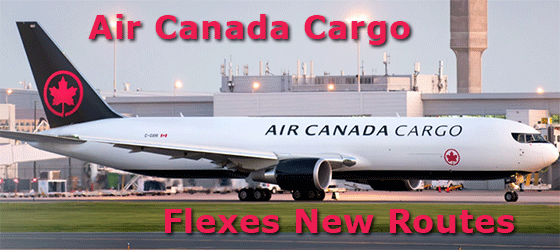
     Air Canada Cargo makes a pretty notable move: expanding its freighter network next week from Toronto with new flights to Amsterdam Schiphol, Monterrey, and Panama City.
     And just as everybody in air cargo is descending upon Miami Beach for the TIACA ACF starting next Monday this is one cargo airline that has to be talked about.
Amsterdam, gets twice-weekly dedicated freighter service to Schiphol starting on October 29.
      Air Canada’s cargo leadership is basically saying: look, transatlantic capacity gets tighter at this time of year, so adding dedicated freighter lift into Amsterdam helps cover that pinch.
     Looking south, new Latin Air Canada freighter routes are aimed at connectivity, with a specific focus on manufacturing and distribution markets.
     Air Canada freghters happen in Monterrey beginning on October 26, and will run three times per week.
     Air Canada is saying, we want deeper reach into northern Mexico’s manufacturing ecosystem.
     If you’re moving components, finished goods, or time-sensitive shipments, take the thrice weekly and the planning flexibility that itoffers.
     Panama City rounds out a premier freighter week at Air Canada joining the freighter network October 25, operating twice a week.
     Panama City is a classic strategic point for distribution into Central America and beyond.
     Twice weekly might sound modest, but for certain lanes it can create reliable, scheduled uplift where shippers previously had to patch together solutions.
     Air Canada Cargo framed these three additions as expanding its scheduled freighter offering from Toronto and adding new routing choices between Europe, Canada, and Latin America.
     Where it takes good timing, they are pointing to better European access via AMS, and with their moves south, specific markets that become more reachable to open connections to other destinations like Quito, Lima, Bogotá, and Mexico City.
     In a related development Air Canada’s cargo division welcomed the news that the airline will resume flights to Tel Aviv earlier than it had planned.
     Four-times-a-week service from Toronto will resume on November 30 using Boeing 787 Dreamliner aircraft.
     Departures from Toronto are on Monday, Tuesday, Thursday and Sunday, and from Tel Aviv on Monday, Tuesday, Wednesday and Friday.
GDA


Donna Mullins

     Airport air cargo stakeholders have some congestion challenges, but help is at work and increasingly on the way to USA airport gateways that have teamed up with Kalé Info Solutions, the wunderkind Airport Cargo Community System (ACCS) that streamlines the entire export and import process for all airport cargo stakeholders.
     Donna Mullins, is Vice President at Kalé Info Solutions, and what her day-to-day really looks like is a glimpse of the intersection of logistics tech and federal compliance.
     Donna’s big focus is deploying the sensational forward-embracing Kalé Info Solutions Airport Cargo Community System (ACCS).
      Donna drives tools that tackle congestion and bottlenecks, like the Kalé truck slots and dock management setups. Instead of trucks lining up and hoping for the best, the idea is real-time scheduling and visibility for all the parties involved.
     She’s also involved in platforms like AvSys for cross-border e-commerce, where the industry moves beyond the old kilo-based air waybill mindset and starts managing high-volume parcels at the piece level with live tracking—basically replacing guesswork and manual check-ins with constant shipment transparency.
     The other half Donna manages is just as intense: making sure all that technology actually matches the rules.
She calls herself a “recovering customs broker,” which tells you a lot about her      background—she’s been a licensed U.S. customs broker since 1990, and she routinely translates what agencies want into what software must do.
     There’s lots more judge for yourself with Donna but nothing in our book is as compelling as the distinctly human side of Donna Mullins.
     She is smart, approachable and she listens quite well and is always extending a helping hand to others.
     Donna works for community at Kalé Info Solutions addresses at JFK, BOS, ORD, ATL.
Kale ACF Booth 324     As October moves into the autumn season of meetings and trade shows all over the world we wonder what is so compelling about Kalé?
     As usual, leaving nothing to chance, here are some experts who wondered about the same thing and deliver some answers.
     Earlier this summer during July 2026 a report by Ti Insight and Kalé on Airport Cargo Community Systems (ACCS) underscored in detail the critical need for digital transformation and mass adoption across the air cargo sector.
     The survey discovered that 63.1% of users of the Kalé ACCS find operational benefits outweigh costs, while 68.2% note improved stakeholder collaboration and 59.1% experience greater end-to-end visibility.
      Well back where it all started in USA, Hartsfield-Jackson Atlanta International Airport collaborated with Kalé Info Solutions, to implement the first Cargo Community System in North America.
 To say that the system has been a roaring success is not overspeak.
     Atlanta launched the Airport’s ACS on November 14, 2019, after several months of testing and piloting with several early adaptors related to trucking, freight forwarding, airlines and ground handling.
     In 2026 Kalé continues to encourage all on-airport cargo-related operators to sign on to ACCS.
      “When it comes to adopting our solution, no one is left out in the cold.
      “Stakeholders are trained on the system by Kalé Info Solutions subject matter experts and opertational support teams” Donna said.
     “Our goal is to deliver an in-depth understanding of how the ACCS system works and benefits each of the stakeholders, including ground handlers, freight forwarders, truckers, shippers, etc.
     “After the training, the stakeholders are able to use and provide feedback and gauge for themselves the benefits (or not) of the system.
     “If stakeholders agree that the system is beneficial and they want to use it, then it’s showtime to develop a strategy to move forward with it.”

Donna Spells Out ACCS

     Truck staging at the air cargo terminals is, at best, first-come, first-served with the handler having no advanced knowledge of what the truck is picking up or dropping off. This creates congestion at the airport, as trucks have to wait for the handler to find the cargo or proper equipment to load or unload the truck. 
The Kalé ACCS allows truckers to schedule a specific time to go to the terminal and gives the handler advanced notification of the shipment data. 
     For example, in case of import cargo, the handler can advise the trucker if the cargo is not ready and the trucker can avoid an unnecessary trip to the terminal; and in case of export cargo, the GHA can view, in advance, the required documentation to accept the cargo.
      A program note looking ahead to October 26 at Miami Beach, Florida, Amar More, Co-founder and CEO of Kalé will be situate at the Miami Beach Convention Center at Booth 324B taking on all commers as the TIACA Air Cargo Forum gets underway.
      Elsewhere Donna Mullins and her always composed and easy-going associates at Kalé up and down the line approach spreading the word worldwide of their better idea for keeping air cargo moving in a understandable relaxed manner.
      “You have nothing lose but the wait,” Donna smiles.

Free-Wheeling Donna

FT:  What is your top priority that Kalé wants industry partners that you talk to one-on-one to have as takeaway?
DM:  Our top priority is for everyone to depart the encounter with Kalé understanding that digital transformation in air cargo is not about implementing another piece of software—it is about connecting the entire cargo community.
      Kalé provides proven Airport Cargo Community System technology that brings airports, airlines, ground handlers, freight forwarders, truckers, customs brokers, regulators and other stakeholders together through a common digital ecosystem.
      We want the key takeaway to be: Kalé can help an airport or cargo community move from fragmented processes and disconnected data to a connected, intelligent and collaborative cargo ecosystem—improving efficiency, visibility, security, sustainability and the overall movement of trade.
      Most importantly, we want all people all over the world, be it in New Orleans, Mumbai, Miami or Timbuktu thinking:
      Kalé understands our operational challenges, has proven solutions, and is a partner we should continue talking with.

FT:   What surprised you in 2026?
DM:  What surprised, and devastated me most, is the loss of Dolly Parton. 
I know it seems crazy, but I (and I believe most of the rest of the world) felt like we lost a best friend that day. 
      Air Cargo News Flying Typers asked me one time some years back to name the Ten Outstanding Women in my life and if you recall, Dolly was one of them.  
A dear sweet friend of mine, Myra Reynolds – also one of my top ten – gave me a book this week that she had bought years ago but never remembered to bring it to the conferences. 
      It was a Dolly book and Myra’s inscription to me was: 
      This Big Golden Book belongs to Donna Mullins who is always like Dolly.
       Love you Myra! 
      If you recall in a 2020 article I made the statement: 
      I believe you can learn from people who you are not directly in contact with. 
      I learned from Dolly that women can be anything they want to be.  And nothing could make me happier than being like Dolly.

FT:   Tell us something about Kalé that we don’t already know . . .
DM:  We celebrated Kalé Foundation Day 2026 on October 9th.
Kalé is a great positive force for both change and good in the world today.

FT:   What can we expect from Kalé in 2027?
DM:  With our new brand and logo taking its shape in our discussions and visions I would say - One Intelligent Platform. One Logistics Community. –
      We look forward to 2027 as the trusted digital infrastructure for global trade—connecting airports, seaports, governments and logistics communities through intelligent, secure and sustainable digital ecosystems that make trade faster, safer, more secure, and easier to use.

FT:   What do you do to relax?
DM:  I enjoy sitting on my back porch where I can look out over the beautiful trees and flowers of nature. In the summertime we get the extra pleasure of watching the hummingbirds.
      I will close our time here with this from a book I read daily and has guided and inspired me my entire life: 
      As iron sharpens iron, so one person sharpens another.
– Proverbs 27:17 
      “Always,” Donna said, “be willing to be someone’s iron!”
GDA/SSA

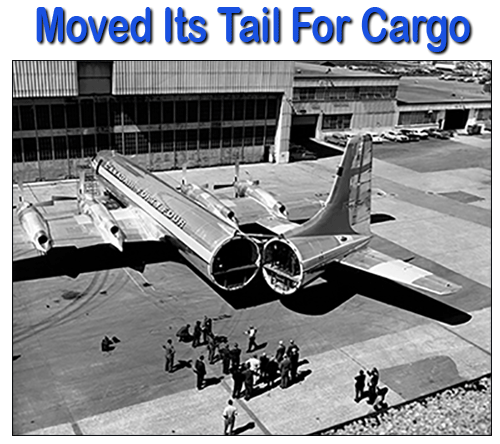
Canadair swing-tail freighter

     Air Cargo Chronicles—A new series presented by Air Cargo News Flying Typers, tracing the evolution of air cargo from the beginnings of flight to the present.
    Canadair CL-44D4 “swing-tail” freighters in 1960 pioneered large commercial aircraft able to accept outsized cargo.
     Prime operators were The Flying Tiger Line with a fleet of 16, Seaboard World Airlines and Slick Airways.
     For more air cargo history:
Introduction click here. 
Air Cargo Debuts In 1910, click here.


FlyingTypers Ad
If You Missed Any Of The Previous 3 Issues Of FlyingTypers
Access complete issue by clicking on issue icon or
Access specific articles by clicking on article title
FT100726Vol. 25 No. 42
Pictures At An Exhibition Voice Of The People
FT101626Vol. 25 No. 43
FIATA Theme For An Imaginary Centennial
FIATA 100—Pictures At An Exhibition
FT102126Vol. 25 No. 44
What To Expect At TIACA ACF
Chuckles for October 21, 2026
Fast Forward GSSA Timothy Pfeil
FIATA Salutes FlyingTypers

Publisher-Geoffrey Arend • Managing Editor-Flossie Arend • Editor Emeritus-Richard Malkin
Senior Contributing Editor/Special Commentaries-Marco Sorgetti • Special Commentaries Editor-Bob Rogers
Special Assignments-Sabiha Arend, Emily Arend
• Film Editor-Ralph Arend • Photo Editor-Anthony Atamanuik

Send comments and news to geoffrey@aircargonews.co
Opinions and comments expressed herein do not necessarily reflect the views of the publisher but remain solely those of the author(s).
FlyingTypers reserves the right to edit all submissions for length and content. All photos and written material submitted to this publication become the property of FlyingTypers Media.
Copyright ©2026 FTMedia, Inc. All Rights Reserved.
More@ www.aircargonews.com

recycle100% Green