 |
On Miami Beach this week the surf will come and go, not unlike the delegates moving in and out of the big Miami Convention Center that is the focal point of the international air cargo community gathering for the TIACA Air Cargo Forum 2026.
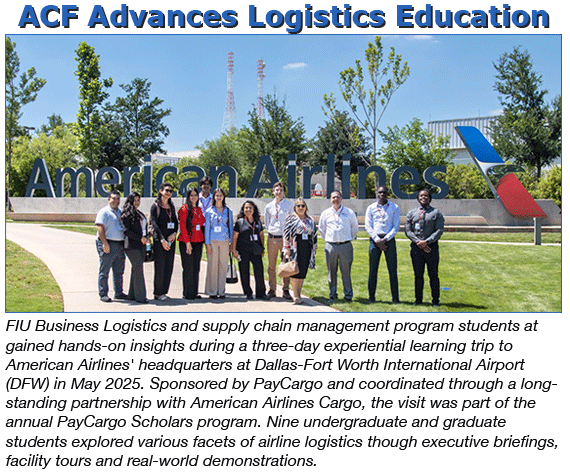
This year the attendees include 15 students from Florida International University (FIU) studying logistics arts and also a group of like-minded students from the Embry Riddle Aviation school in Miami.
On Wednesday the FIU group will be in booth at ACF and the students will be mixing throughout the ACF event activities out to learn and get some up close and personal advice from air cargo professionals.
Attendees of ACF are encouraged to advance these bright and interested youngsters; to take a moment for the future of air cargo logistics, extend and bring them into your action at the ACF.
The future you can think at that moment—is in your hands.
Florida International University (FIU) is a major public research university located in Miami, Florida.
Founded in 1965 and opened in 1972, it is one of the largest universities in the United States, enrolling over 56,000 students and offering more than 200 degree programs across multiple colleges.
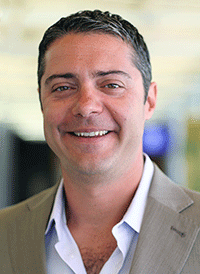 “Florida International University (FIU) has a highly ranked and robust logistics and supply chain teaching program, which includes specialized training and experiential learning in air cargo operations, said Dr. Gregory Maloney, Faculty Advisor & PayCargo Program Director at FIU.
“Because Miami is one of the largest air cargo and international trade hubs in the world, FIU has heavily tailored its programs to meet this industry's demands through our dedicated Department of Marketing and Logistics within the FIU College of Business. Bachelor of Business Administration (BBA) in Logistics and Supply Chain Management:
“An undergraduate degree available both on-campus and fully online, focusing on global logistics, export marketing, and transportation principles,” Professor Maloney enthused.
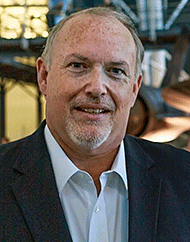
“If there is one thing that air cargo needs right now, it’s to reach out and embrace the next generation of logisticians,” says air cargo stalwart educational pioneer Mike White.
“In my role as an advisor to FIU this gathering represents much more than another industry conference.
“It is an opportunity to connect the next generation of logistics and supply chain professionals with the experienced leaders, organizations, and emerging technologies that will shape the future of global commerce.
“Throughout my career, I have witnessed the remarkable evolution of the air cargo industry.”
“What was once a business driven primarily by personal relationships,
experience, and manual processes has evolved into a highly sophisticated global
network supported by advanced technology, digital connectivity, and increasingly complex supply chains.
“Yet one fundamental principle remains unchanged: our industry’s success depends upon knowledgeable people, strong relationships, and effective leadership.
“Today, air cargo faces a new period of transformation. Government regulations, tariffs, geopolitical uncertainty, shifting trade lanes, fluctuating cargo volumes, and changing capacity requirements are forcing airlines, freight forwarders, airports, and logistics providers to reconsider traditional operating strategies.
“At the same time, artificial intelligence, automation, predictive analytics, and digital technologies are creating extraordinary opportunities to improve efficiency, visibility, and customer service.
“For students studying logistics, international business, transportation, and supply chain management, these developments represent both challenges and exciting career opportunities.”
“This is why I believe the relationship between universities such as FIU and the global air cargo community has never been more important.
“The TIACA Air Cargo Forum provides students with an opportunity to engage directly with airline executives, freight forwarders, airport operators, technology providers, government representatives, and other industry professionals. These interactions help bridge the gap between academic education and the practical realities of international commerce.
“All of us need to help students better understand not only how cargo moves around the world, but why it moves, how international trade decisions are made, and how transportation networks influence businesses, economies, and
consumers.
“I also believe our industry must take greater responsibility for attracting, mentoring, and developing the next generation of professionals.
“As experienced industry leaders move into new chapters of their careers, we must ensure that their knowledge, relationships, and decades of experience are passed along to those who will follow them. Industry partnerships with universities, internship opportunities, mentoring programs, and direct student participation in major conferences should be viewed as investments in our industry’s future.
“Importantly, mentorship is not a one-way relationship.
“Today’s students bring fresh perspectives, technological knowledge, creativity, and an understanding of emerging digital tools, including artificial intelligence. “Their ideas can challenge conventional thinking and help established organizations recognize opportunities that might otherwise be overlooked.”
“Down the road over the next three to five years, I believe the most successful air cargo organizations will be those that combine technological innovation with operational expertise, strong customer relationships, and a genuine commitment to developing their people.
“The future will require professionals who are adaptable, internationally minded, technologically capable, and prepared to respond to rapid changes in global trade.
“My hope is that FIU students attending TIACA will leave with more than conference materials and business contacts. I want them to gain a deeper appreciation for the importance of air cargo, develop meaningful professional relationships, and recognize the tremendous opportunities available to them throughout the international logistics community.
“To the industry executives attending the conference, I would offer a simple challenge:
“Take the time to engage with these students.
“Share your experiences, discuss the challenges facing your organizations, and help them understand the skills and commitment required to succeed.
“A conversation lasting only a few minutes may inspire a career that contributes to our industry for decades.
“The future of air cargo will not be determined solely by the aircraft we operate, the technology we develop, or the trade lanes we serve. It will ultimately be determined by the people we educate, mentor, inspire, and prepare to lead.
“That future begins with the opportunities we create for the next generation today,” Mike White concluded.
gmaloney@fiu.edu
SSA
|




 Vol. 25 No. 44
 Vol. 25 No. 45
 Vol. 25 No. 46


 “The TIACA Air Cargo Forum provides students with an opportunity to engage directly with airline executives, freight forwarders, airport operators, technology providers, government representatives, and other industry professionals. These interactions help bridge the gap between academic education and the practical realities of international commerce.
 100%
Green