 |
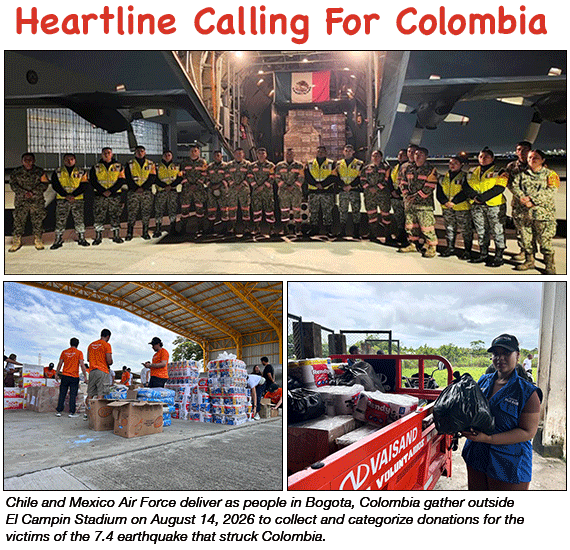
Latin America stepped up with planes, experts and supplies for the earthquake that hit Colombia earlier this month, reinforcing regional ties, as nations work to safeguard a fragile tourism rebound.
A 7.4 magnitude earthquake struck western Colombia on August 10, 2026, destroying homes and infrastructure across cities such as Cali and Pereira and remote communities near the Pacific coast. According to reports at least 329 people have been killed, more than 4,600 others injured, leaving 247 confirmed missing and many more have been displaced, as operations continue in collapsed buildings and isolated valleys.
Teams have been clearing debris and working around damaged roads and bridges.
Coverage from international and regional outlets describes neighborhoods flattened, power and water networks disrupted and local hospitals operating close to capacity. The scale of the disaster has quickly outstripped local resources, prompting calls for coordinated international assistance from across Latin America and beyond.
Into this context, Chile and Mexico emerged as the visible early responders.
For its part Chile’s own experience with major tremors and tsunamis over recent decades has shaped a disaster management system regarded as among the most technically advanced in the region, giving added weight to its offer of support to Colombia.
Public statements from Santiago show that Chile organized what officials there describe as a sustained humanitarian air bridge to Colombia.
Flights were prepared with search and rescue specialists, structural engineers, medical staff and field hospitals, as well as tons of high priority cargo such as water purification units, power generators, shelter materials and medical supplies.
Mexico’s Armed Forces moved from preparing aid for Colombia to actively delivering it, establishing an expanding humanitarian air bridge to Pereira.
With roads and bridges damaged in parts of western Colombia, getting help in by ground can be slow or impossible. Air assets can land at bases capable of handling larger transport aircraft, then distribute aid outward. And just as importantly, public information suggests Chile is coordinating through regional emergency channels, aiming to complement what’s arriving from other partners like Mexico, Brazil, and the United States, instead of duplicating the same deliveries.
GDA
Donations help U.S.-based groups on the ground.
All Hands and Hearts has provided search and rescue tools like jackhammers and pickaxes to the Pereira fire department as well as blankets and rehydration supplies for those affected. Link to donate.
CARE has a longtime presence in Colombia. Its immediate support will focus on food assistance through cash and vouchers, emergency supply care packages, and protection and emotional support for affected families. Link to donate.
Direct Relief is funding medical responders on the ground and preparing to deliver requested medications and healthcare supplies. Link to donate.
GEM is joining with local partners to provide essential kits with food, water, and hygiene necessities. Link to donate.
|





 Vol. 25 No. 36


 100%
Green
100%
Green